

Induction of Labour (IOL)
Your LMC has directed you here to prepare yourself for a possible induction of labour (IOL).
Induction of labour is a process used to gently encourage pēpi and the body to begin labour when continuing the pregnancy is no longer the safest option. It can involve methods that soften and open the cervix or stimulate contractions and is planned together with you after careful kōrero about your health, your baby, and your preferences.

Frequently asked questions
What is an induction?
Induction of labour is when labour is started artificially, rather than beginning naturally on its own. This may involve medication, breaking the waters, or both.
Why might induction be recommended?
Your LMC or obstetric team may recommend induction if:
-
You are overdue (usually 41+ weeks)
-
Your waters have broken but labour hasn’t started
-
There are concerns about pēpi’s growth or wellbeing
-
You have medical conditions such as pre-eclampsia, diabetes, or high blood pressure
-
There are concerns about reduced movements
The goal is always the safety of both you and your baby.
How long does an induction take?
It varies. For some, labour establishes within hours.
For others (especially first babies), it can take 1–3 days depending on how ready the cervix is.
Induction is often a process, not a quick event.
Is induction more painful?
Induced contractions can feel stronger and closer together, particularly with oxytocin. Many wāhine choose additional pain relief, but this is entirely your choice and support is always available.
Can I use the birth pool if I’m induced?
Unfortunately, it is not recommended. CWH is limited in terms of birthing pools. It is also recommended to have continuous CTG monitoring. CTG equipment is not able to be used in the water, which means the birth pool is generally not an option during an induced labour.
We know the pool can be a comfort measure, so we’ll always support other ways to help you feel calm, involve water, and feel well supported throughout your labour.
What should I bring/how should I prepare?
We encourage you to take:
- Water bottle (and keep really well hydrated)
- Snacks
- Chargers
- Comfortable clothing
- Entertainment (devices etc)
- Hospital bags
Can I move around during induction?
Yes, during most parts of your induction you are free to move around, and you are not confined to your room.
Once labour is established, you are moved to a birthing room. Continuous CTG monitoring is recommended to keep an eye on baby’s heartbeat and your contractions. This can limit larger movements, but you can still change positions, sit upright, stand, or use a birth ball with support.
What are the risks of induction?
Like any intervention, induction has benefits and risks. These may include:
-
Strong or frequent contractions
-
Baby becoming distressed
-
Increased chance of assisted birth (forceps or vacuum)
-
Increased likelihood of caesarean (especially if induction doesn’t progress)
Your obstetric team will discuss your individual situation so you can make an informed decision.
What is the process?
Once you have your IOL date, you will arrive to level 3 CWH (birthing suite). Once you are there you will be admitted to the assessment part of the ward where you will be looked after by a hospital team of midwives. They will explain and start the process of an IOL.
Once you are in established labour, the hospital midwives will contact your LMC, and she will come in then. This is also when you will be moved to a birthing room (if you have not already been).
Can I have support people with me?
The assessment space is small, so you may want to limit visitors during the early stages of induction. You are welcome to have one support person with you overnight.
Once labour is established and you are moved into a birthing room, you are welcome to have whoever you would like with you for support.
What happens if i decline an IOL?
Choosing to decline is your right. If you decide to wait, we will usually recommend increased monitoring such as CTG, scans, blood pressure checks or blood tests, depending on the reason induction was suggested.
The original concern does not disappear, so ongoing kōrero and review of the plan is important. We will continue to support you and revisit decisions together.
Methods of IOL

Declining an IOL for Post Dates (>41w)
Women who choose to decline an induction of labour (IOL) should have their decision fully respected.
Research shows that at 41 weeks or later, some women prefer to wait for labour to begin naturally, while others would choose an induction next time. From 42 weeks, extra monitoring can be offered to check on pēpi and the amniotic fluid around them, although this monitoring has not been shown to reduce the risk of stillbirth. This usually includes:
- twice‑weekly CTG
- ultrasound checks of fluid levels
- umbilical artery Doppler assessments
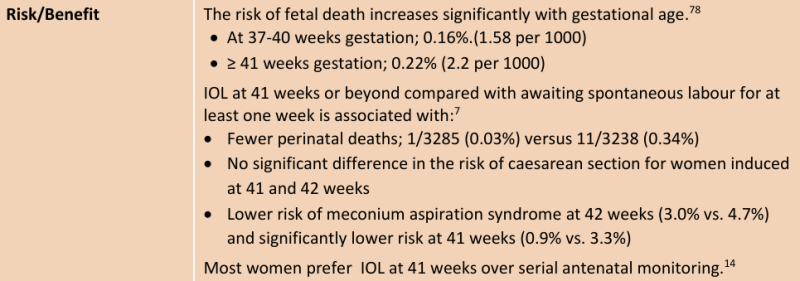
CDHB Maternity guidelines - Induction of Labour
Exact timing of IOL depends on the women’s preferences and local circumstances.